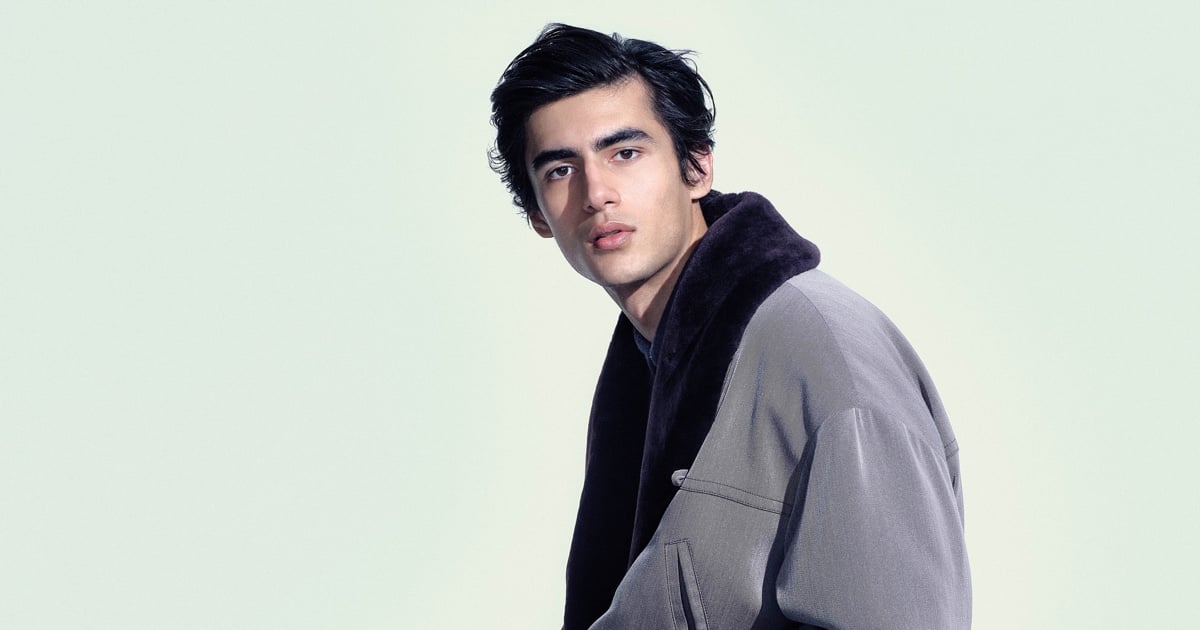
The quiet authority of Armani has always lived in what is left unsaid. Silvana Armani and Leo Dell'Orco are not chasing a mood board for fall-winter 2026; they are in conversation with the decades that built the house. The campaign image, a gray jacket with a dark shearling collar on Akbar Shamji, carries that weight without shouting. It is a study in restraint, a reminder that legacy is not a relic to be dusted off but a foundation to build upon. For our readers, the takeaway is direct: the Armani man is not defined by a single season's trend but by a posture that outlasts it. This is the same logic that makes Jonathan Anderson's Dior Icons: The Shoes and Bags to Own Now so compelling, where investment pieces are chosen for their permanence, not their novelty. And when we look at A Considered Addition: The Fall Bag Defining Modern Style, the connection sharpens: polish without preciousness is the through-line that separates enduring style from disposable fashion.
There is a tension here worth naming. The past is a tempting mirror, but the Armani future cannot be a reissue of itself. Leo Dell'Orco's perspective implies a translation, not a transcription, of the house codes. The shearling collar is not retro; it is a tactile argument for warmth and confidence in a world that has grown visually noisy. We would tell a reader who asks about this campaign that the real story is not the garment's silhouette but the intention behind it. It is a curated hand, not a random assemblage. That is the difference between owning a jacket and wearing a uniform. The related coverage on Chanel 26K: An Elevated Look at Fall/Winter 2026's Iconic Bags reinforces this idea: iconic does not mean inert. It means a piece has been designed to move forward with you, not to hold you in place.
What we appreciate most is the absence of apology. There is no "just threw this on" energy here, no self-deprecating shrug. The Armani man is deliberate. He understands that tailoring is architecture for the body, and that a shearling collar is a statement of intent, not an accident. For our readers, the practical note is to look at your own rotation and ask what you are carrying forward. The question is not whether you can afford the piece, but whether you can match its composure. The one detail to watch is the collar itself, because it signals a shift from the sharp, bare lapels of recent winters to something more protective, more grounded. That is the future of the house, and it is already here.