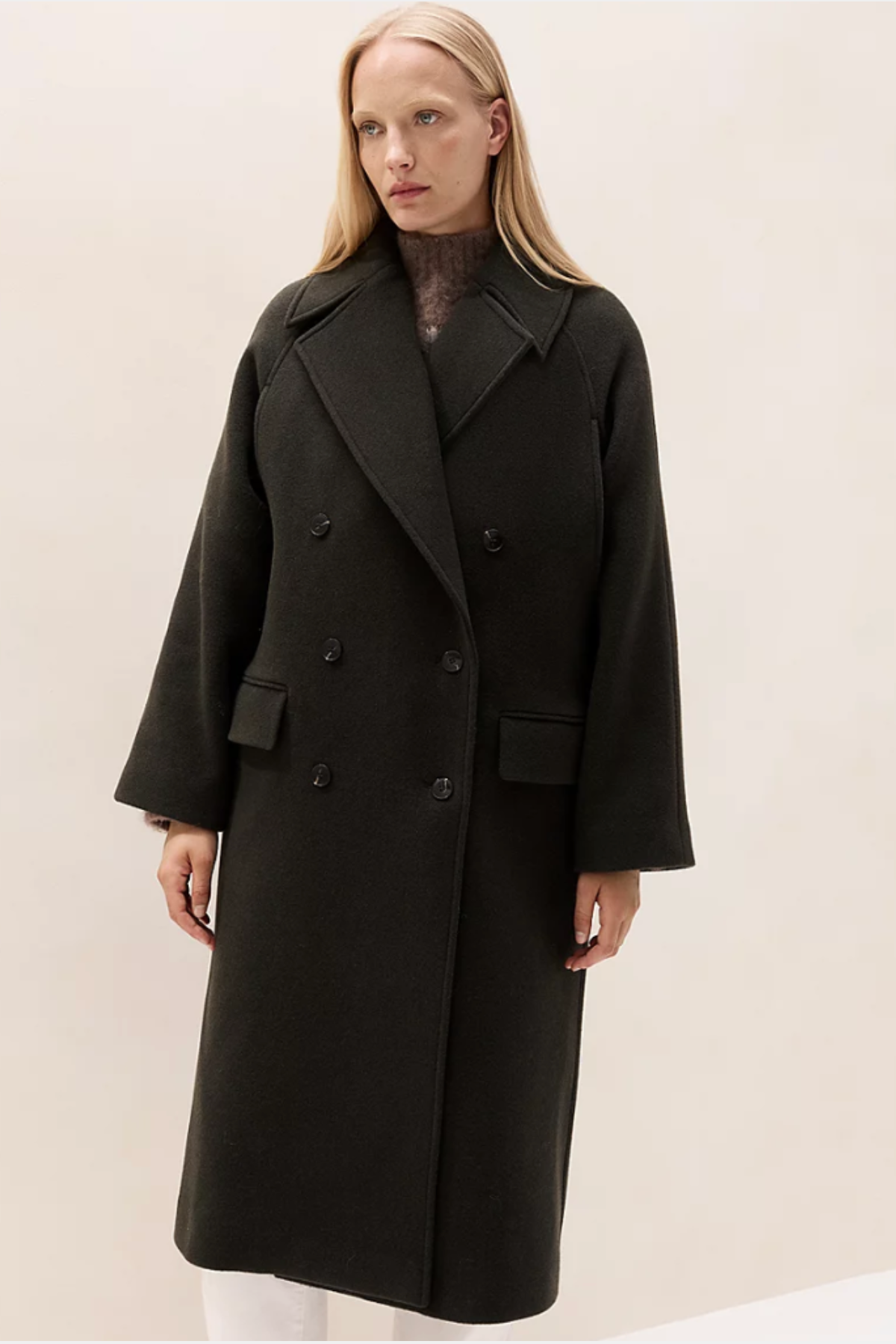
There is something quietly radical about a wardrobe built not for attention, but for endurance. This London fashion editor's nine winter staples are less about seasonal novelty and more about a deliberate return to form, pieces that ask nothing of you except to be worn well. We admire the restraint. In a culture that rewards constant novelty, choosing a dense cotton T-shirt or a well-cut crew neck jumper over a trending silhouette is an act of self-possession. This is not a list of what to buy; it is a philosophy of how to dress when you already know who you are. It echoes the sentiment we explored in The Neat Woman's Quiet Return to Refined Winter Style, where polish is not about perfection but about intention. Here, the same logic applies: a wool coat that insulates naturally, a trench coat built for transition, a leather tote with thick shoulder straps, these are not compromises. They are decisions.
What makes this edit feel distinctly London is not the weather itself, but the attitude it demands. Parisians may have *je ne sais quoi* and New York its It-girl energy, but London's cold-weather style is pragmatic without apology. The editor notes that surviving minus-degree days is baked into the city's DNA, and we see that resilience in the details: straight-leg jeans smart enough for the office yet carrying a '90s cool-girl edge, ruched loafers that deliver "undone elegance" without sacrificing comfort, an argyle jumper that brings retro collegiate warmth without feeling costumed. These are not pieces that scream for attention. They whisper confidence. The effect is a wardrobe that functions as a quiet canvas, and that is precisely the point. The editor observes that these staples allow for the bold prints and colours of 2026 to take centre stage, but we would argue the opposite is equally true: the staples themselves are the story. A well-made white T-shirt, as she says, is your smartest investment, not because it is flashy, but because it is foundational.
The most telling piece in this capsule is the ruched loafer. Soft, unstructured, rendered in leather or suede or croc, it captures something essential about the modern London approach to dressing: the pursuit of elegance that does not try. It is a shoe that looks chic with jeans and skirts alike, but its real appeal is in its refusal to be rigid. This is not the polished formality of a decade ago. It is a looser, more self-assured version of refinement, one that understands that true style is not about being uncomfortable to prove a point. The same sensibility runs through the tapered trouser, which the editor describes as voluminous yet narrowing toward the ankle, offering a sleeker finish without the restriction of a skinny cut. These are clothes that move with you. They remind us of the unfinished details we celebrated in The Unfinished Details That Make an Outfit Memorable, where the undone hem or the slightly relaxed fit is not a flaw but a signature.
What we are left with is a wardrobe that functions less like a collection of items and more like a system. Each piece earns its place through utility and grace. The wool coat is insulating and timeless; the crew neck jumper balances proportions without bulk; the leather tote holds everything without causing back pain. There is no room for the merely decorative. The concrete takeaway here is simple: the most intentional wardrobes are not the most expansive, but the most edited. The question this editor poses is not "what should I buy next?" but "what will still serve me when the temperature drops and the city demands I keep moving?" That is a question worth sitting with.