Stars Used the Met Gala 2026 Red Carpet to Celebrate Black Art
Our take
When the Met Gala posed the question "is fashion art?" for its 2026 Costume Institute exhibition, the red carpet delivered an answer before the first exhibit door even opened. This year's affair transcended the usual spectacle of designer names and heel-to-hem measurements. What unfolded at the Metropolitan Museum was something far more deliberate — a collective assertion by Black artists, musicians, and cultural figures that fashion is not merely decorative but deeply intentional, historically rooted, and profoundly political. Beyoncé, co-chair and perennial trendsetter, arrived not as a pop star in a gown but as a living gallery installation, her look channeling archival references that spoke to lineage and legacy. Rihanna, never one to follow a trend when she can set one, brought the kind of curated maximalism that only a true Met Gala veteran can pull off. And Janelle Monáe, whose every public appearance reads as a thesis statement, delivered yet another masterclass in dressing with purpose.
What made this year's red carpet genuinely significant was not the scale of the garments but the intention behind them. Multiple attendees used their looks as vehicles for centering Black artistry in a space that has historically centered whiteness — both in its curatorial choices and its cultural gatekeeping. The result was not performative activism dressed in couture but something more substantive: a visual argument that Black creativity is not a trend or a moment but the very foundation upon which modern fashion stands. From the choice of Black designers to the deliberate styling references to artists like Elizabeth Catlett and Alma Thomas, the evening functioned less as a celebrity parade and more as a curated exhibition in its own right. Even the after-party circuit reflected this energy — as detailed in our coverage of Lisa's under-$100 bra top moment at the Met Gala after parties and the broader constellation of celebrity looks that extended the conversation well beyond the museum's steps, the night made clear that accessibility and artistry are not opposing forces.
The cultural weight of this moment matters because the Met Gala is, whether we acknowledge it or not, one of the most influential platforms in visual culture. What happens on that carpet shapes editorial direction, retail decisions, and — critically — whose stories get told through the lens of fashion. When icons like Chase Infiniti emerge as breakout forces on that stage, it signals a shift in who gets to define luxury, beauty, and artistic credibility. It is not simply about representation as optics. It is about the redistribution of creative authority. The 2026 Met Gala suggested that the industry is, perhaps slowly, beginning to understand that elevating Black art is not an act of charity or trend adoption but an act of intellectual honesty about where fashion has always drawn its deepest inspiration.
The question now is what follows. Moments like these carry enormous visibility, but visibility without sustained structural change risks becoming a beautiful gesture that fades by the next season. The real measure will be whether the institutions — the museums, the houses, the editorial boards — carry the energy of this evening into their acquisition decisions, their hiring practices, and their editorial calendars for the remaining 51 weeks of the year. Fashion at its most powerful does not simply reflect culture. It shapes it. And if the 2026 Met Gala proved anything, it is that the most compelling style statements are the ones that refuse to be separated from the world that made them.
Image Source: Getty Images
The 2026 Met Gala asked a simple question: is fashion art? Tied to the Costume Institute's "Costume Art" exhibition, celebrities like co-chair Beyoncé, Met Gala veterans Rihanna and Janelle Monáe, as well as breakout star Chase Infiniti all showed up ready to prove the point, each channeling their inner art connoisseur. But some took it a step further and used the opportunity to put Black art front and center on the Met steps. It's a welcome gesture after the 2025 Met Gala theme "Superfine: Tailoring Black Style," which celebrated Black designers. The continuation sends the message that our identity is more than just a passing trend.
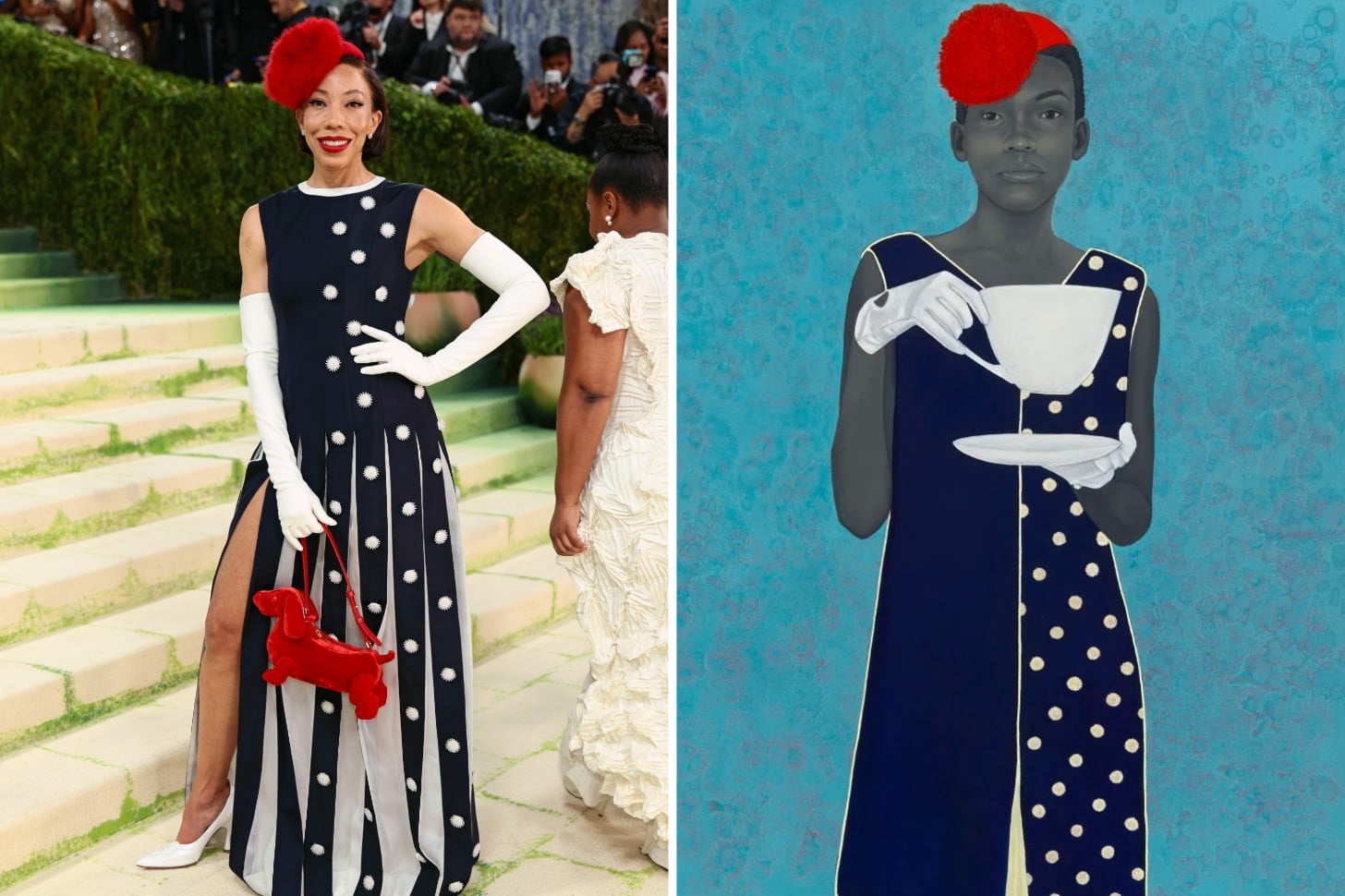 Image Source: Getty Images
Beyoncé wore a custom design by Olivier Rousteing and Tschabalala Self wore Brandon Blackwood, while Amy Sherald — known for her 2018 portrait of Michelle Obama — collaborated with Thom Browne on a blue gown with red accents inspired by her painting "Miss Everything (Unsuppressed Deliverance)." Black art wasn't just included in the exhibit (represented by Telfar bags in various skin-tone hues and African antiquities) — it was all over the carpet.
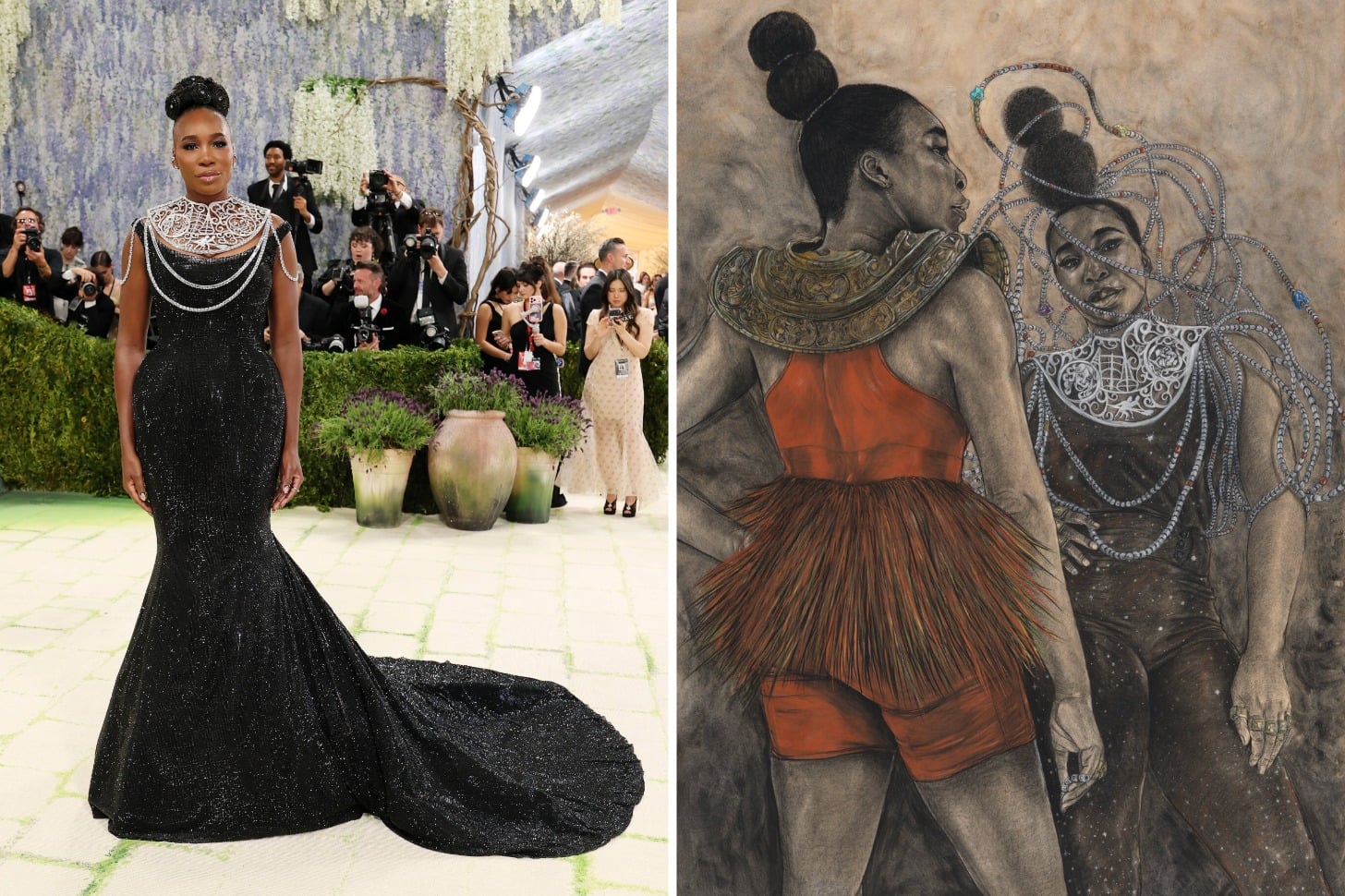
Serving as co-chair this year, Venus Williams took the "fashion is art" brief literally, wearing a black gown dripping in Swarovski crystals that was inspired by a 2022 portrait of her at the Smithsonian's National Portrait Gallery, painted by Bronx artist Robert Pruitt.
Image Source: Getty Images
Beyoncé wore a custom design by Olivier Rousteing and Tschabalala Self wore Brandon Blackwood, while Amy Sherald — known for her 2018 portrait of Michelle Obama — collaborated with Thom Browne on a blue gown with red accents inspired by her painting "Miss Everything (Unsuppressed Deliverance)." Black art wasn't just included in the exhibit (represented by Telfar bags in various skin-tone hues and African antiquities) — it was all over the carpet.
Serving as co-chair this year, Venus Williams took the "fashion is art" brief literally, wearing a black gown dripping in Swarovski crystals that was inspired by a 2022 portrait of her at the Smithsonian's National Portrait Gallery, painted by Bronx artist Robert Pruitt.
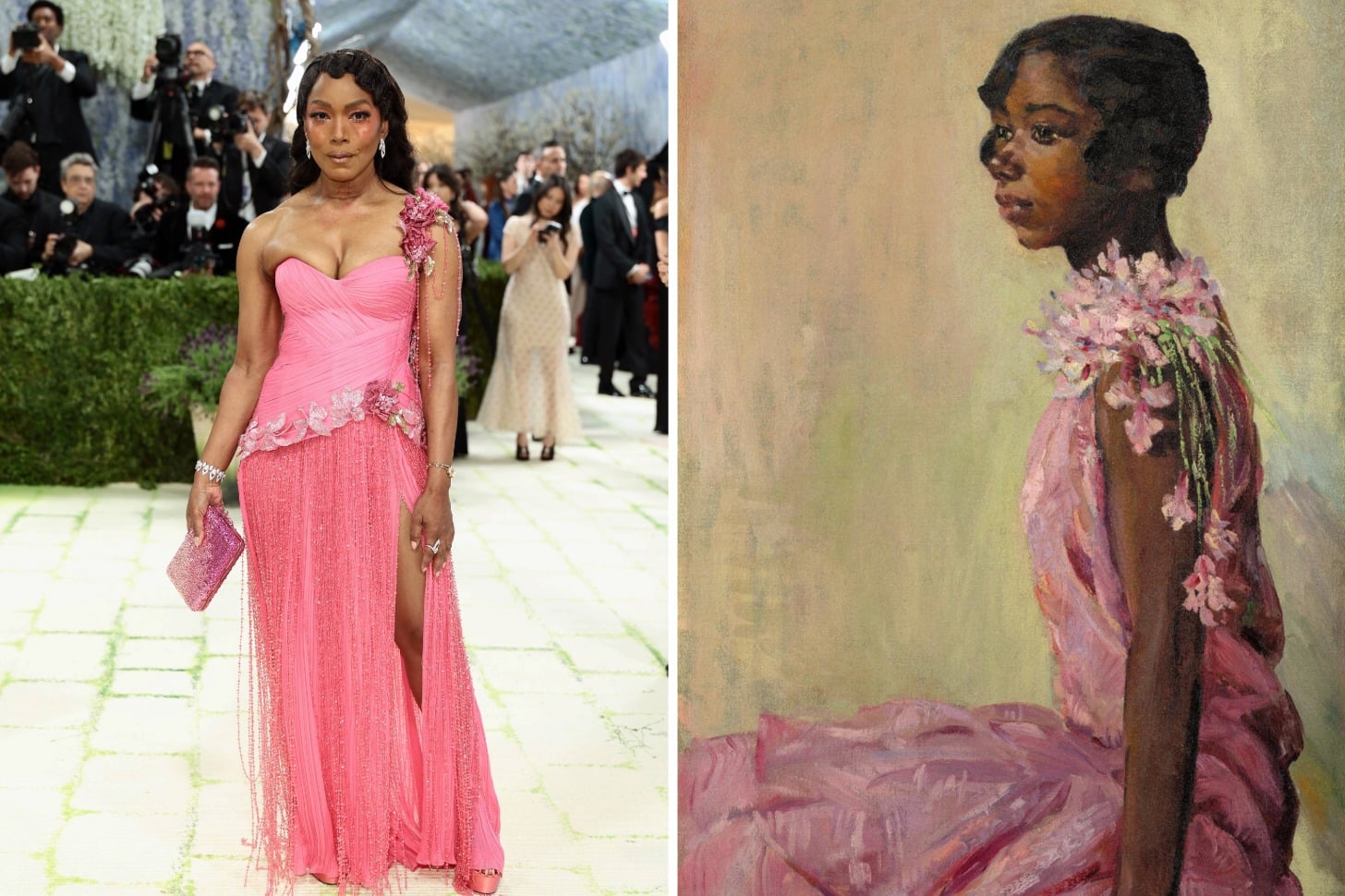 Image Source: Getty Images
Angela Bassett followed a similar path, mirroring Harlem Renaissance painter Laura Wheeler Waring's "Girl in Pink Dress" in a pink floral appliqué Prabal Gurung gown.
Image Source: Getty Images
Angela Bassett followed a similar path, mirroring Harlem Renaissance painter Laura Wheeler Waring's "Girl in Pink Dress" in a pink floral appliqué Prabal Gurung gown.
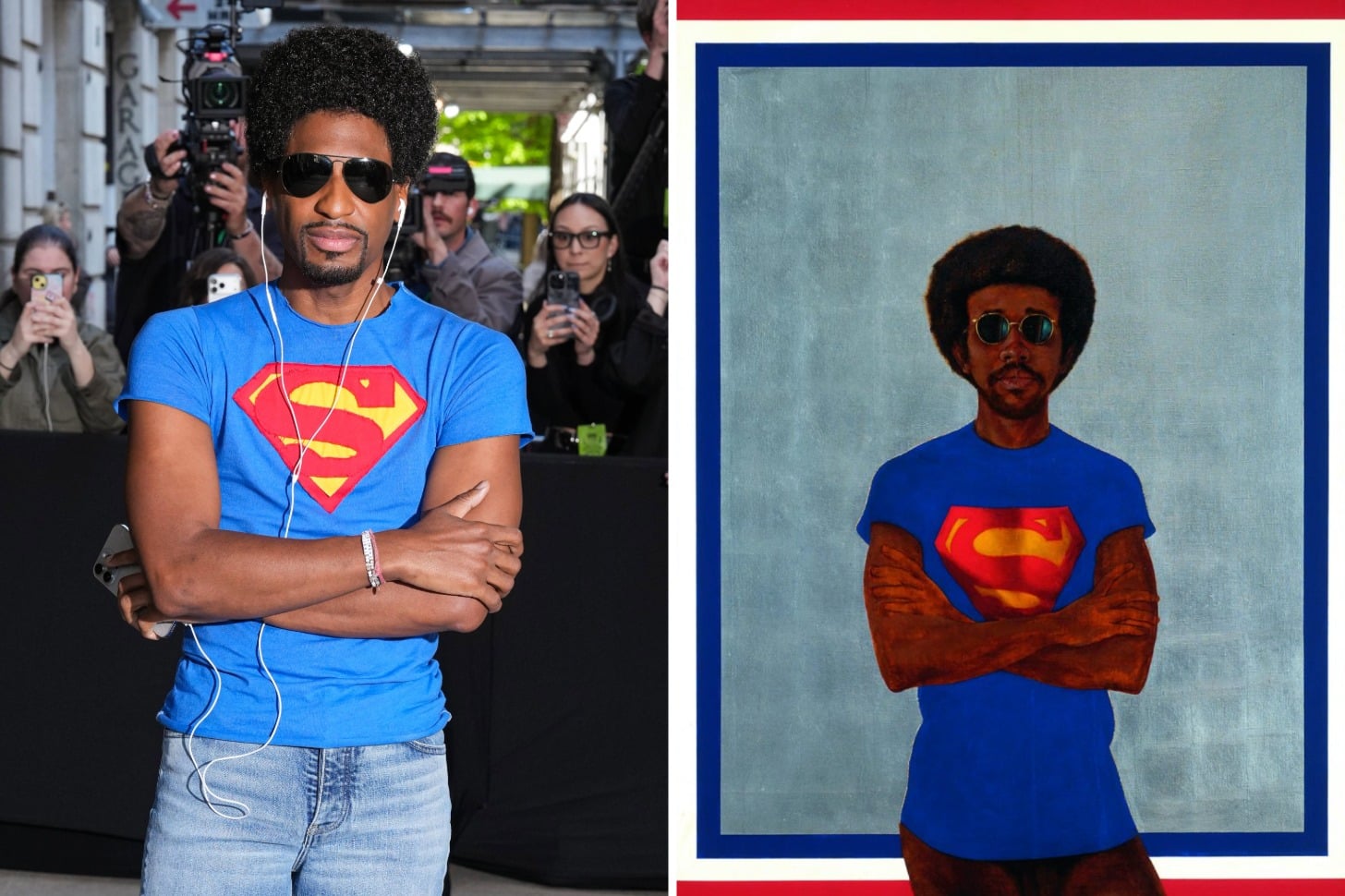 Image Source: Getty Images
Grammy Award-winning singer and composer Jon Batiste took the idea of paying homage to Black artists to new heights.
Image Source: Getty Images
Grammy Award-winning singer and composer Jon Batiste took the idea of paying homage to Black artists to new heights.
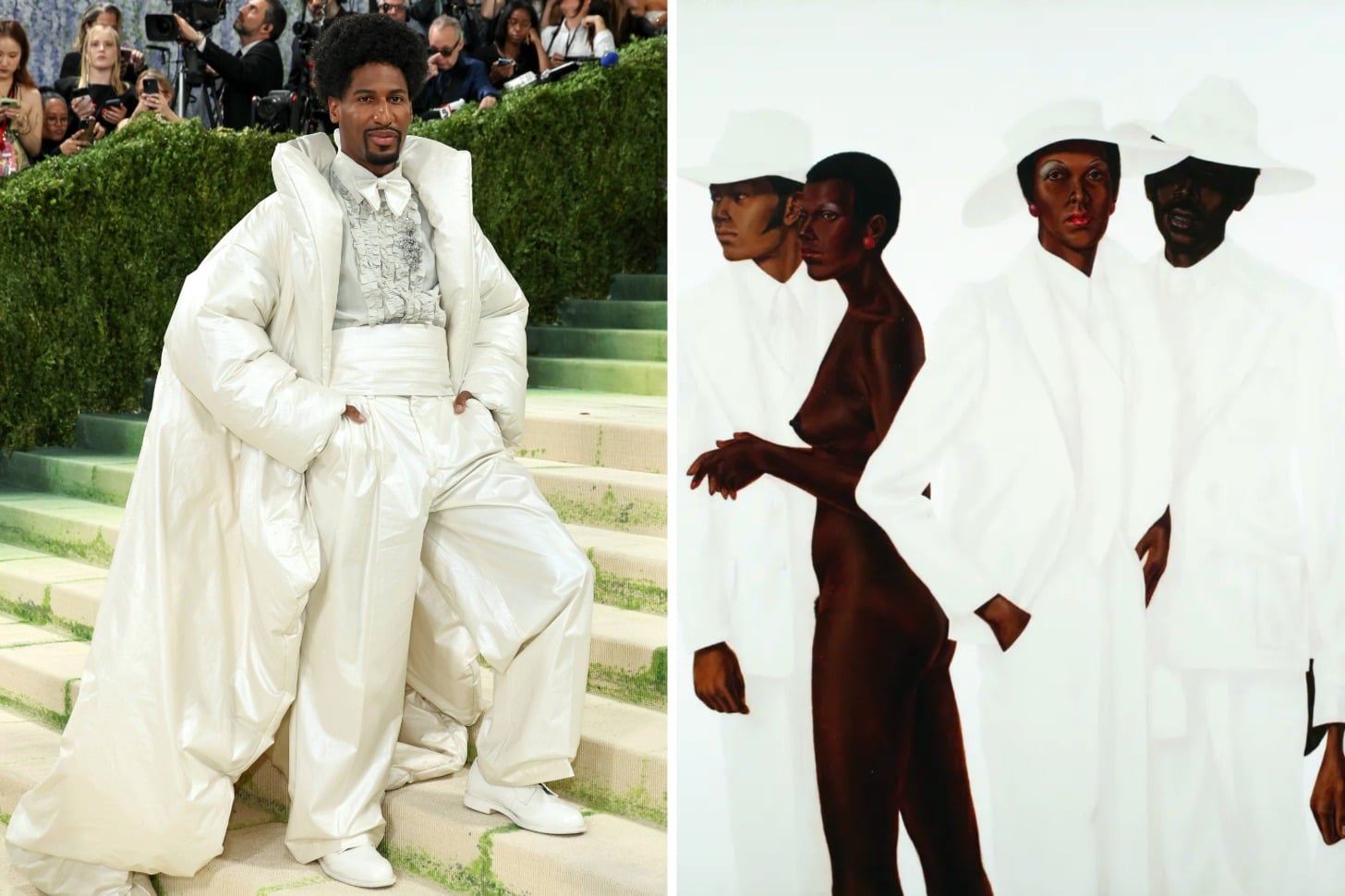 Image Source: Getty Images
Leaving the Carlyle Hotel, he wore a blue Superman T-shirt and aviator shades inspired by Barkley Hendricks. On the Met Gala red carpet, he continued the reference in a full white look, nodding again to Hendricks' work.
Image Source: Getty Images
Leaving the Carlyle Hotel, he wore a blue Superman T-shirt and aviator shades inspired by Barkley Hendricks. On the Met Gala red carpet, he continued the reference in a full white look, nodding again to Hendricks' work.
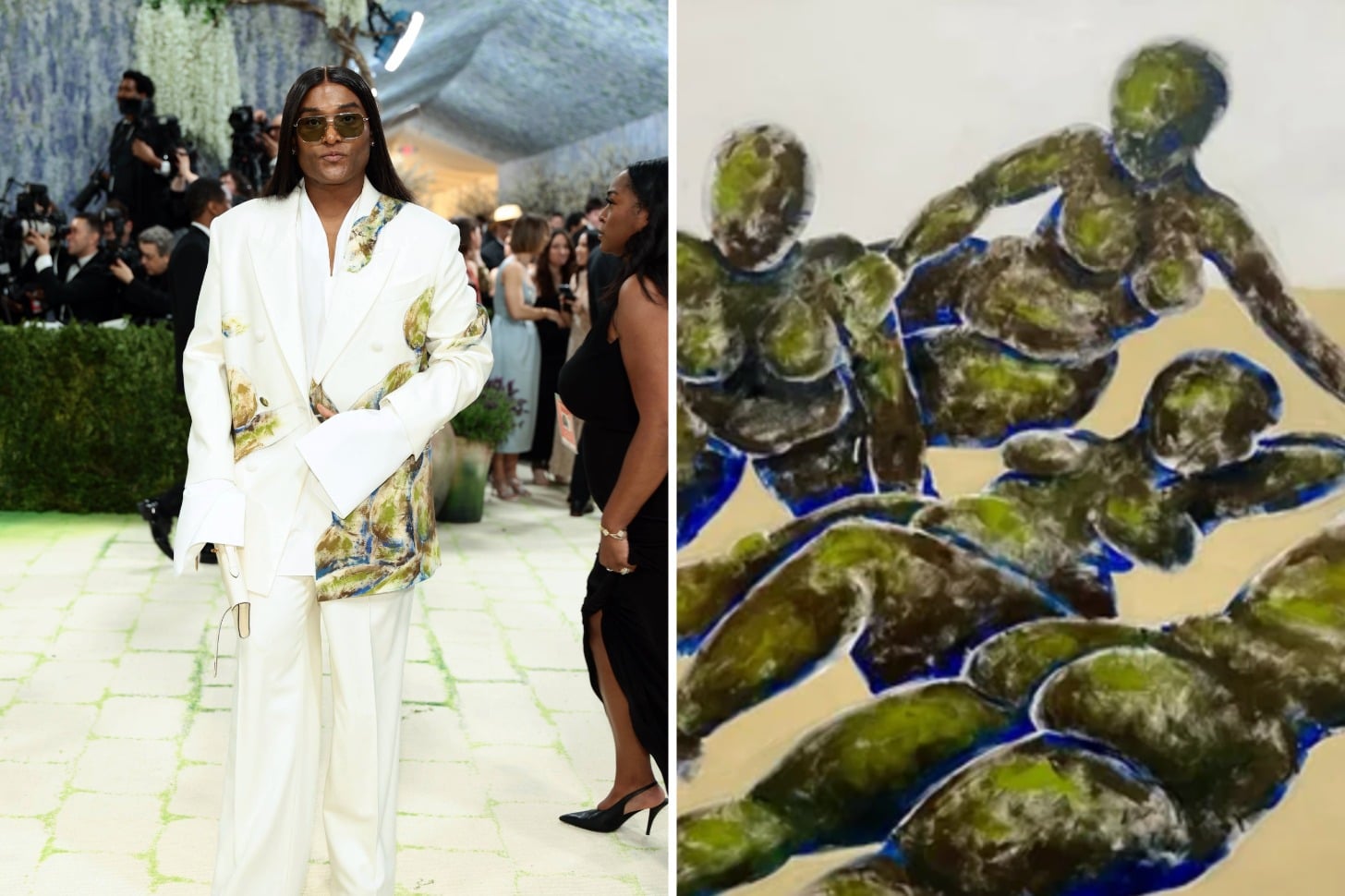 Image Source: Getty Images
Everyone's favorite image architect Law Roach (sans Zendaya) also went for the physical art angle, wearing a custom collaboration between AMI and Gabonese artist Naïla Opiangah, a white suit with painted bodies.
Some stars expressed their appreciation for Black art through their glam, using hair and makeup as a canvas. Gabrielle Union, in a sequined brown form-fitting Michael Kors dress, wore her hair in large, doubled crowns as an homage to photographer Kwame Brathwaite, a key figure in the "Black Is Beautiful" movement of the 1960s. His work celebrated Black women, natural hair, and beauty during a time of racial unrest and narrow beauty standards.
Image Source: Getty Images
Everyone's favorite image architect Law Roach (sans Zendaya) also went for the physical art angle, wearing a custom collaboration between AMI and Gabonese artist Naïla Opiangah, a white suit with painted bodies.
Some stars expressed their appreciation for Black art through their glam, using hair and makeup as a canvas. Gabrielle Union, in a sequined brown form-fitting Michael Kors dress, wore her hair in large, doubled crowns as an homage to photographer Kwame Brathwaite, a key figure in the "Black Is Beautiful" movement of the 1960s. His work celebrated Black women, natural hair, and beauty during a time of racial unrest and narrow beauty standards.
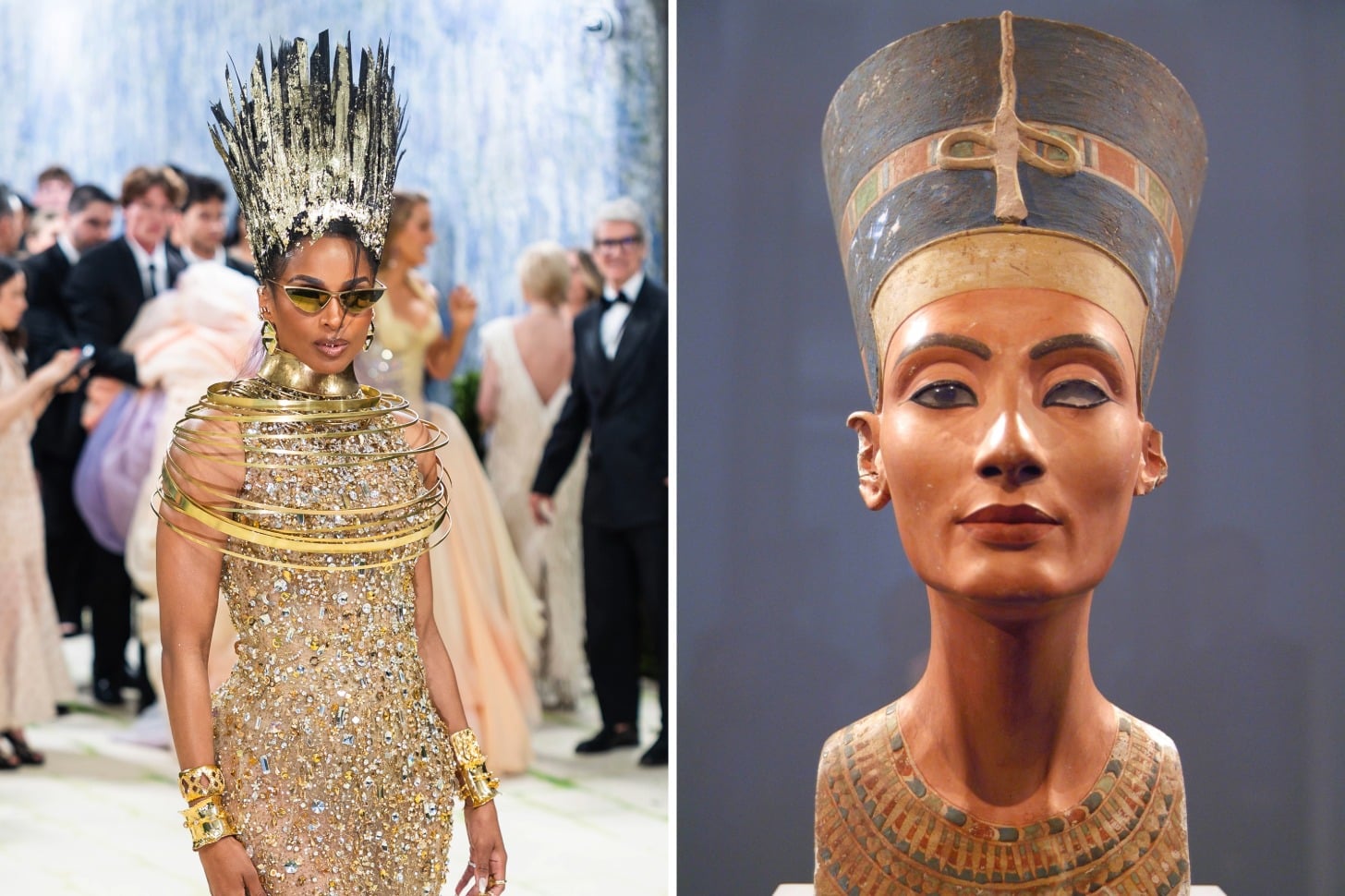 Image Source: Getty Images
Ciara took a similar approach, channeling Egyptian queen Nefertiti in an embellished gold gown with matching accessories. The pièce de résistance was a gilded, sculptural hair moment created by Cesar Ramirez and inspired by Nefertiti's iconic crown.
It's powerful to see Black Met Gala guests using their platforms to highlight Black art in such a visible way. It's also a notable shift that celebrities took representation into their own hands this year, a divergence from the year prior when the museum, its curators, and the gala planning committee all championed Black designers and artists.
Either way, by the end of the night, it was clear that Black art was, is, and always will be the moment.
Shelton Boyd-Griffith (he/him/his) is a passionate writer who uses his platform to spotlight marginalized voices in the design space, queer and nonbinary designers, and BIPOC-owned brands. With bylines in Vogue, Fashionista, Models.com, Essence, and more, he covers fashion, fashion news, industry news, pop culture, and more.
Image Source: Getty Images
Ciara took a similar approach, channeling Egyptian queen Nefertiti in an embellished gold gown with matching accessories. The pièce de résistance was a gilded, sculptural hair moment created by Cesar Ramirez and inspired by Nefertiti's iconic crown.
It's powerful to see Black Met Gala guests using their platforms to highlight Black art in such a visible way. It's also a notable shift that celebrities took representation into their own hands this year, a divergence from the year prior when the museum, its curators, and the gala planning committee all championed Black designers and artists.
Either way, by the end of the night, it was clear that Black art was, is, and always will be the moment.
Shelton Boyd-Griffith (he/him/his) is a passionate writer who uses his platform to spotlight marginalized voices in the design space, queer and nonbinary designers, and BIPOC-owned brands. With bylines in Vogue, Fashionista, Models.com, Essence, and more, he covers fashion, fashion news, industry news, pop culture, and more.Read on the original site
Open the publisher's page for the full experience